
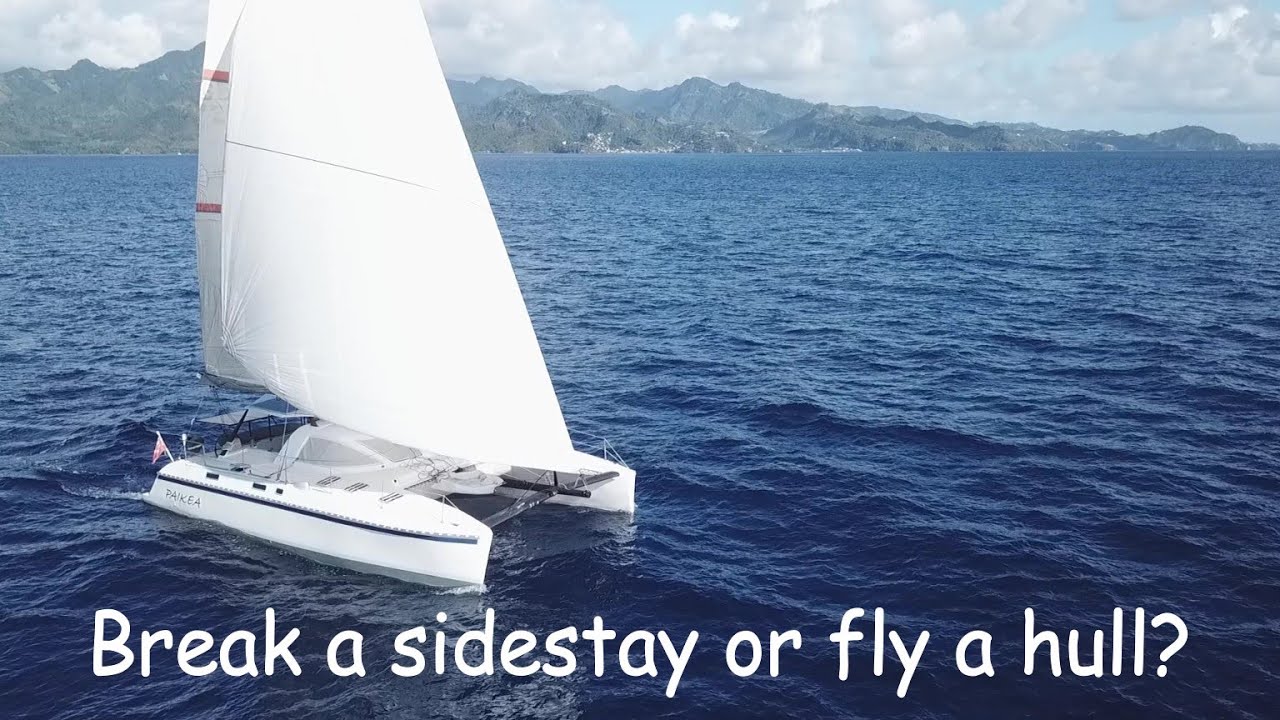
Ar trebui ca marile voastre să se spargă înainte ca catamaranul să zboară o coca? În acest videoclip, eliminăm o concepție greșită comună și periculoasă în lumea navigației. Pe baza a zeci de ani de experiență profesională multihull, explicăm fizica momentului de dreapta, de ce o defecțiune a platformei este adesea mai periculoasă decât o captură gestionată și de ce responsabilitatea marinarului este cel mai critic sistem de siguranță de pe orice barcă. https://youngbarnacles.com/should-sidestays-break-before-flying-hull/ Capitole: 0:00 – Mitul periculos 0:45 – Analogia mașinii: De ce „eșuând să fie în siguranță” este logical 1:30 – Motivul pentru care pisicile grele își pierd echipamentul 2:15 – Momentul dreapta și greutatea Responsabilitatea marinarului: sistemul dvs. de siguranță #1 5:40 – Realitatea celulelor de încărcare (de ce 99% din bărci nu au una) În acest videoclip, veți învăța: • De ce proiectarea unei platforme pentru a eșua este un sentiment fals și periculos de securitate. • Relația critică dintre greutatea bărcii, momentul de dreapta și încărcăturile de platformă. • De ce pisicile de înaltă performanță (de la clasa A la bărci cu arme) sunt concepute pentru a zbura coca în siguranță. • De ce vizionarea transomului dvs. este un ecartament mai fiabil decât o celulă de încărcare. Deep Dive: De ce greutatea este esențială pentru o multihull înțelegeți conceptul de bază al momentului de dreapta care alimentează această întreagă discuție. Citiți postarea pe blog: https://youngbarnacles.com/why-weight-is-important-on-your-multihull/ Resurse gratuite pe site-ul nostru: Căutați biblioteca noastră gratuită de articole despre sistemele de navigare și barci performante. Găsiți mai multe resurse gratuite aici: https://youngbarnacles.com
source
Latera dvs. sunt proiectate să eșueze înainte de a zbura o coca
18 thoughts on “Latera dvs. sunt proiectate să eșueze înainte de a zbura o coca”
Comments are closed.














Great video Shayne! Thank you so much for your input on this topic. I have seen videos of the ORC57 using this system and praising it as a safety feature. Always good to know the other side of the coin, especially coming from someone we can trust. Cheers!!
Most years I see a cat or two without rigs. Almost always Lagoons, FP's or Leopards. Almost always they are overloaded. I see a dismasted mono once every five or six years, more than half from chainplate failure, the rest from random end fitting failure.
Thanks for giving the punch-line in the intro. Would have spit my lunch all over the table if we had to sit here for minutes wondering if you would take sides with the side stays breakers! How did this topic rise up for you guys, ie who is actually promoting this idea? Thankfully not a conversation happening around the San Francisco area 🙂
Congrats to team OE in round 1. But some young barnacles fans are also A.Magic fans…
Nicely put. I honestly thought the "rig designed to lose a stay before the boat flies a hull" was a myth with the big heavy cats. But cost savings? Yeah of course it does make sense to not have 1" diameter shrouds.
Have you thought about making your own strain gauge load cells for your shrouds?
Is it a good idea to have a fuse on the main sheet?
It would be more useful to have a considered and thoughtful conversation about rigging replacement and how it is driven by insurance requirements rather than actual meaningful data, which grows and evolves over time.
As always great information and so well explained! I have no experience from the equipment that release sheets when the situations get out of hand, like they have on some gunboats etc. would be great to get it explained in depth and perhaps also som examples that's out there with pros and cons.
I enjoyed that analysis, thanks. Something else I saw recently could benefit from expert commentary is the benefit/risk of a load dumping cam cleat or how racing innovations fit or fail in cruising applications.
I’d like to try that it seems fun and scary which is the best fun. Is it a hair trigger between upside down and just flying along? Is it difficult to put on the breaks on a sailboat? Do people go sailing million dollar yachts that have no common sense? Lol
Agree! Not that you need anyone to say that but I think this goes back to learning how to sail. I believe it is vitally important for a large cat captains to have sailed small cats and to learn how to manage wind in the sails. Once a person can manage this then it is easier to understand how to manage a large cats power. I hope new catamaran captains will take the time and have a little fun with beach cats as often as they can. It so much fun to boot.
Load Cell $65 Amazon
Catamaran Impi recently added load cells to their Lagoon 440.
whoever came up with that 'myth' is a bit nutso. Our boat was a 53 by 27 foot ally Crowther, shrouds were 14mm 19X1 SS, breaking strain around 14 tons, way over the total weight of the loaded boat. Not a performance boat at all although had massive daggerboards, lightship was 10.5 tons. Mast was 65 ft, boom 20 ft, rig was a mast head cutter, double sleeved from the base to about a meter short of the masthead. All up weight of the rig with wire and forestay foil was 752kg.
have you seen cyclops marine digital direct wired load pins ? are they any good for shrouds ?
I've never heard this one before.
Obviously started by someone with no experience.
Agreed, but your analogy is wrong.
A car with tyres too narrow slides, too grippy tips over. Better to slide!
i really like this type of videos, any chance for more?