
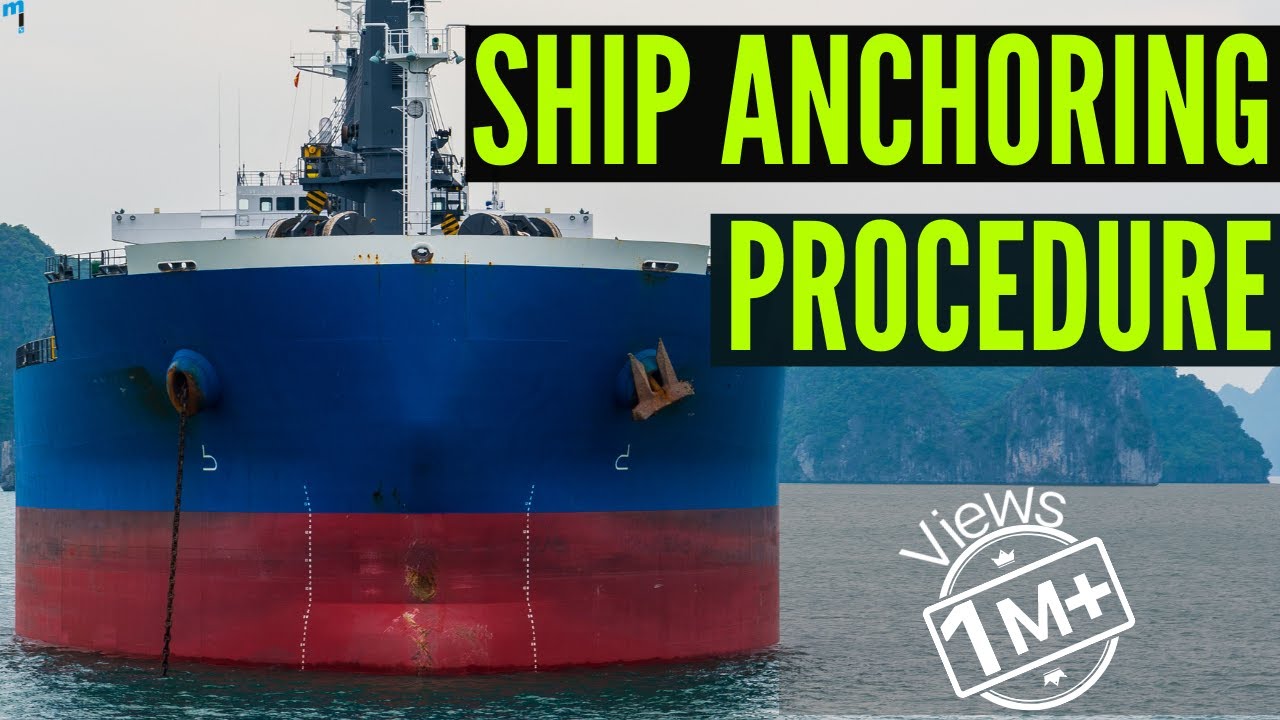
#Nanchor #ShipAnChor #Windlass Anchoring este una dintre operațiunile foarte frecvente la bordul navelor. O serie de variabile și factori externi influențează durata și locația unei operații de ancorare. În timp ce tipul de fundul mării este de cea mai mare importanță în timpul ancorării, sunt cele mai bine preferate terenuri moi de noroi sau funduri de argilă. Ar trebui să aibă grijă ca fundul de ancorare să fie lipsit de linii electrice, cabluri submarine, conducte sau roci. Diverse metode de ancorare includ luarea în considerare a direcției și a rezistenței vântului, curentului și fluxului de maree. Adesea, cunoștințele locale bune ajută un marinar să stabilească manevrele și acțiunile necesare care trebuie luate în timpul ancorării. Aceste operațiuni sunt sub responsabilitatea ofițerilor de punte. Aceasta implică utilizarea echipamentelor critice de bord și necesită un nivel ridicat de conștientizare situațională. Responsabilitatea cheie a ofițerului de punte la o stație de ancorare este utilizarea utilajelor de ancorare și a puterii omului disponibil pentru efectuarea operației în siguranță și eficient în conformitate cu instrucțiunile Maestrului. În majoritatea cazurilor, orientările teoretice și cunoștințele de carte sunt utile doar într -o măsură. Conștientizarea situațională și spontaneitatea ofițerilor, precum și capacitatea lor de luare a deciziilor instantanee ajută la efectuarea operațiunii. O bună cunoaștere a manevrabilității navei și limitarea echipamentelor implicate vor ajuta în continuare ofițerul să ia astfel de decizii spontane. Competența ofițerului este decisă cu privire la capacitatea sa de a lua în considerare situația, de a -și comanda echipajul și de a evalua ordinele cedente de către Maestru, de a efectua operațiunea în siguranță și eficient. Citește: 9 puncte de amintit când renunțați la ancora navei în situații de urgență-https://www.marineinsight.com/guidelines/9-points-remember-dropping-ship-anchor-emergency/ credit video: https://www.youtube.com/user/neo5362/ film Clip Credit: Caddyshack Credit Credit: http://bit.ly/2vmub6r
source
Cum funcționează ancora de nave? – Procedură pentru ancorarea unei nave pe mare
39 thoughts on “Cum funcționează ancora de nave? – Procedură pentru ancorarea unei nave pe mare”
Comments are closed.











Very easy to understand. Great explanation
What happens if power is out during heaving the anchor.. please tell me
good
Devil claw in windlass??
Sprechanzie English??
How long an anchor chain does a ship usually have?
I.e. on how deep waters can a ship anchor?
How does the anchor work in tidal streams which have two oppsite directions?
Educational yet soothing at the same time – unintentional ASMR. Information was just what I was looking for as I saw a video of an incorrectly deployed anchor which looked extremely dangerous
Sir very gud video gud knowledge wanted to ask one thing as we r telling the lead long stay short stay by that captain looks the position if anchor holding the seabed or not .Wat is the exact use of telling clock many of seaman don't know why they tell clock lime 12:00lomg stay medium why clock is told ya if we tell long clock wat will happen ??why captain ask the clock as of we tell the lead of anchor long ya short ya clock is told??
Why always captain wait vessel to swing towards head of the current ya some captain directly drop anchor with facing towards current why ship always captain wait after anchorage also captain wait ship to get towards the head of current why wanted to know the reason sir?
Very well explained video, thank you!
Great video! Very helpful, thanks!
So on the lifting process. how you asure the anchor will not play against you ? should you pull it against water current maybe ?
Good explaied and continue explain only mechanical…what is the lub changing hours how and what you do the used oil …what is theatrical length and your con rod lenght3..how the speed Governer function ..and the ruder hydralic circuit and function..the more you explain you go in deep to the subject..but we do nothing…good keept up …like orean shoots …
Great video
I think after watching this video I feel confident that I can anchor any ship provided that the sea is calm and quiet . Thanks for the explanation .
Very educative! And well explained,, thumbs up 👍
How to identify the length of anchor
Very informative.
It’s pronounced as Pee-Vot and not Pi-Vot !
Up Rohit
Neat bit of information!
For some reason its considered rude in english (or at least american) culture to correct pronunciation, which i dont understand as how is someone expected to progress in their mastery of another language if no one offers them tips(politely of course. if done rudely, as with anything done rudely, it is indeed rude regardless of intention). So, I offer this correction, politely as possible (….damn my culture….): The word pivot, you pronounce the first syllable like 'pie' or 'py', with a hard 'eye' sound. The 'i' should sound more like an 'eh', or 'ea' sound as in 'head'. Or the 'i' in 'American' now that I think about it, just that little sound bridging the 'air' and 'kan' sounds. p'eh'vot. Hopefully that makes sense, the proper descriptors for how to shape sounds in given languages escapes me at the moment. Its the only thing that really stuck out to me with your accent and pronunciations. But hey, I can barely get my German pronunciations correct, heck I still screw up some English ones(and Ive been speaking that one my whole life! 😅), so I still applaud picking up a second language well enough to put out a video as informative as this! 😃👍
Good video.
Pls explain anchor terms
I don't suddenly it attacked my mind to watch it 🤣
What to do if anchor cable had developed the kinks?
Thanks a lot
Put the iron anchor post on the iron man from the day the earth stood still
More info on Khan shooting
How the anchor is pulled back?
Thanks for the amazing explanation. I am doing some research about ships for the novel I am currently writing, and I have a question. Do you think an adult could pass through the hole of the hawse pipe, if the ship in question was a large container ship? (I apologise in advance if the question should sound too silly for those who actually know the business!) thanks to anyone who will take the trouble to answer ❤️
Can you make a video in which the full steps of Anchouring is done like
Captain make a team of 3 to 4 people and they go to forecastle and check the machinery like this type of steps
Superb video!!!
Till now I thought ships are anchored on rocks for strong grip
can’t see a video with this accent
Thanks
Excellent video. Very informative.
Good job!
Author english is TERRIBLE!
May I upload test video of anchor??? https://youtu.be/vqjyUfHbPa4?si=LPw2tW_okTTZ0hW-