
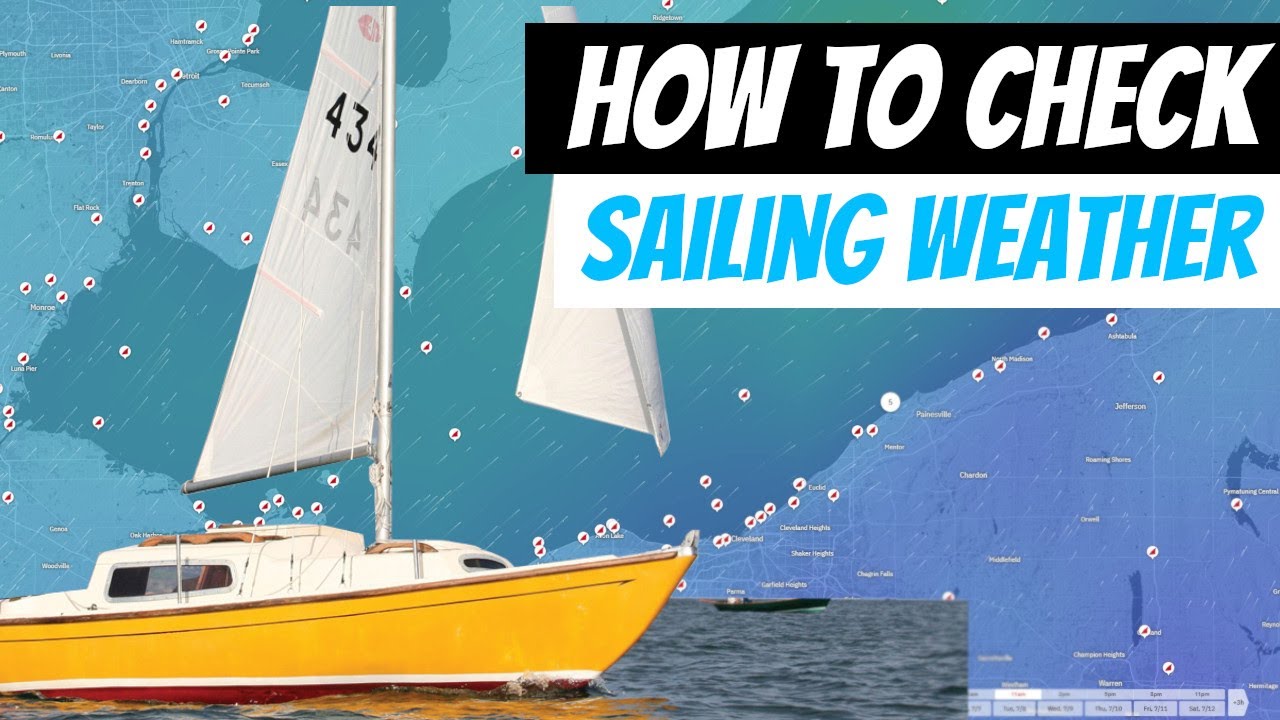
Navigarea în siguranță este esențială și a avea un plan de vele este esențial pentru o zi bună de navigare. Folosesc Windfinder pentru a vedea vântul și valurile și pentru a -mi planifica călătoria cu navigarea pentru a mă asigura că știu la ce să mă aștept, să am un plan de rezervă și să salvez puncte. Alegerea cât de mult vânt este prea mult, citirea înălțimii și duratei valurilor și cunoașterea limitelor tale sunt importante. Iată lista mea de verificare pentru a face un plan de navigație pentru a naviga în siguranță și a -i învăța pe oameni cum să navigheze fără să navigheze înfricoșător sau să iasă de sub control. Doriți să ajutați să sprijiniți Lady K Nailing? Faceți clic aici pentru a deveni patron: http://www.patreon.com/ladykssailing sau aici pentru a face o donație unică: http://www.ladyksailing.com/team-k Urmăriți Lady K pe Facebook: https://www.facebook.com/ladykksailing sau Instagram: https://www.instagram.com/ladyksailing/
source
Cum se verifică vremea navigației – EP 337 – Lady K Nailing
20 thoughts on “Cum se verifică vremea navigației – EP 337 – Lady K Nailing”
Comments are closed.











Trying to figure out between lake Michigan around Michigan City or Lake Erie at Toledo to harbor my boat and learn to sail. Both lakes about 2 hours from me.
Which one would you pick based on which direction the wind usually blows in the warmer months?
Thanks mate i really enjoy your videos!
You've said nothing about the beer to person ratio for after the sail
I would keep an eye to the actual weather deviating from the forecast. If actual is not the forecast, what's going on? If in doubt head to shore.
You're blessed on Lake Erie. No tides. In tidal conditions one must plan for the tides as well.
Really valuable info! Thanks for sharing ,would be a lot of help when Extraordinary Horizons set sail!!
As others have said, tides and current are key. Where my boat lives, it can be the best weather day ever, but if it’s a negative tide, I’m not getting out of the harbour for a couple of hours! (My last marina, I couldn’t get off the dock on a negative tide, she’d be sitting in mud!) And a leisurely downwind sail in light air with the current translates to a tedious upwind beat against current unless you are out long enough to catch the opposite tide. (And then you get wind over tide chop.)
Current matters too. Check tides to see if the current will be against the wind. This can really empower the waves where I sail (SF).
All really good advice and considerations. Thanks Tim!
I find that underestimating wind is a problem. I prefer to not go above 20 knots (and I admire folks like NBJS who are sailing in 50 knots…). I catch myself thinking that 25 knots isn't that far off on paper. However, the 5 knots difference is massive when it comes to forces applied to the sails and the boat. I tend to base my decisions on wind gusts and not on average wind.
LOL Scaring the pants off a newbie is my idea of fun. Then they won't ask again to go out with me. I don't like having anyone onboard my boat!!
Nice video with good info. I chuckle at the beginning of your videos though — I can’t believe you chose the intro of Frank Zappa’s “Dirty Love!” 😂😂😂
We had 6 people and 4 novices on a bareboat '50 in the windward Caribbean (open ocean) during winter. We put a reef in and never took it out. Comfort and safety over speed/excitement.
I like checking multiple forecasts just to make they are telling me the same thing and always keep the worst forecast in my head when we head out.
If the conditions are bad I'd rather be onshore, wishing I was sailing rather than sailing, and wishing I was onshore.
Unrelated to this topic, but I would like to see you cover the new cruising fees for the Bahamas. I recently heard about it on another podcast. I think it needs dissemination to the sailing community at large. It’s a major revision of cruising fees in the Bahamas.
When the mosquitoes are out we call it the Blood Hour. Here on the equator it's always at dinner time so we never get to eat outdoors.
Last Sunday I solo sailed a new to me boat, 26’ in 13kn gusting 20kn. It was … spirited.
Hi Tim. Good planing especially for beginners! You mentioned in another video about getting good used sails. I have a Catalina 34 and the sails are getting tired. Do you have contacts that may be selling theirs? Thanks for your videos and any help you can do, Dan
These wind/wave apps are the cat's meow. On the west coast there was always the Coast Guard VHF radio broadcast of expected wind and wave forecast…the ubiquitous "two foot chop" in the Georgia Strait.
⛵
What about your recent Nassau trip. Ppl should read all the info around about you lol