
Alăturați -ne în timp ce explorăm lumea palpitantă a navigării competitive, unde bărcile se ciocnesc în evenimente de curse intense, precum Regata Narrows 2025. Pe Strangford Lough, bărci cu pânze precum Elan 37 și J109 se angajează în traversări apropiate, prezentând abilitățile marinarilor cu experiență care navighează în port și stea. J109, o alegere populară pentru navigare și curse, este adesea văzută în acțiune la evenimente precum Regata Narrows, unde se aplică regulile IRC Yachting. Cu designul său elegant, Elan Yacht este o forță cu care trebuie să fie luată în considerare pe apă, în timp ce barca cu pânze J109 își demonstrează capacitățile în viața de navigare și navigarea stilului de viață. Redline Racing și alte canale de navigație prezintă adesea evenimente similare de curse de regată, unde obiectivul este să -i depășească pe adversari și să traverseze mai întâi linia de sosire. Pentru cei care adoră plimbarea cu barca și navigarea, acest videoclip este un ceas obligatoriu, oferind o privire asupra lumii interesante a vlogurilor navigate și a navigării competitive pe căi navigabile frumoase precum Strangford Lough. De la barcile de jos în sus până la marinari cu experiență, toată lumea poate aprecia fiorul navigației și camaraderia care vine cu ea. Echipa de la Bottom Up Boats speră că vă bucurați de clipurile scurte din sezonul nostru de curse din 2025.
source
Ce se întâmplă când bărcile se ciocnesc așa?
21 thoughts on “Ce se întâmplă când bărcile se ciocnesc așa?”
Comments are closed.











Nothing
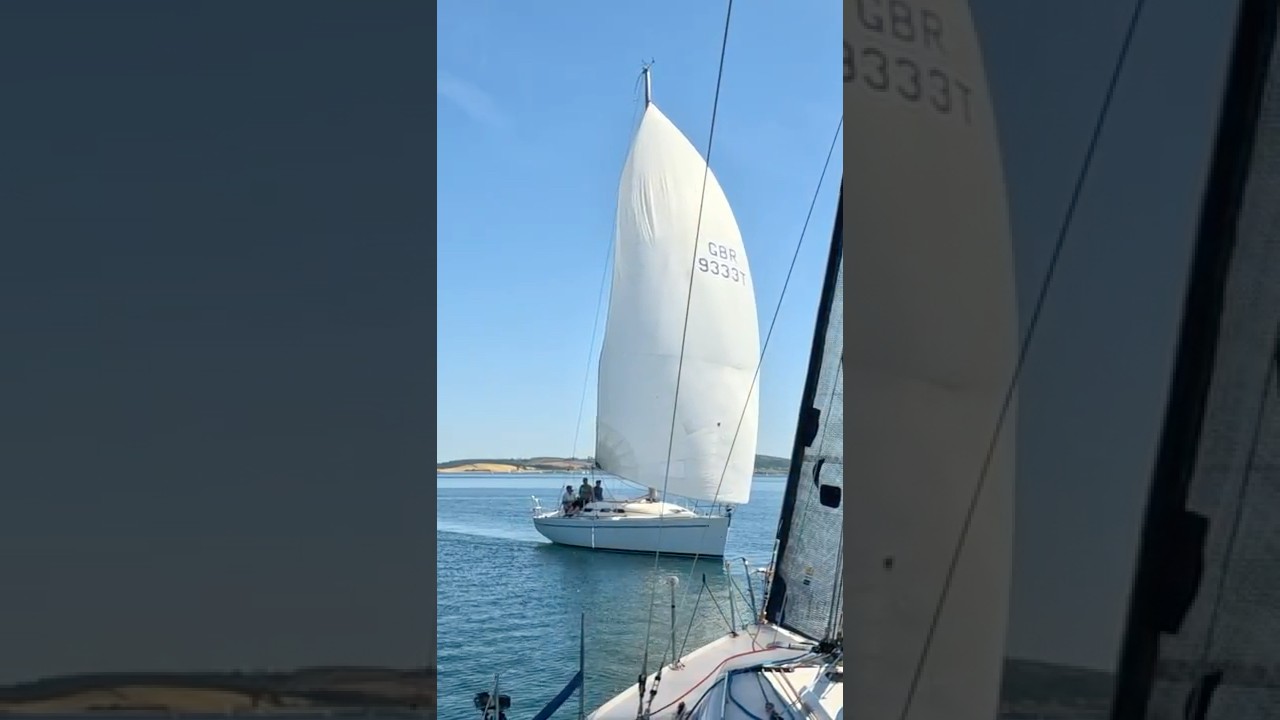
Everyone did exactly what they were supposed to do. 93337 (starboard tack) held its course, and the port tack boat altered course enough to avoid a collision.
Nothing to see here. Correct behaviour by all concerned. No drama whatsoever
Windward boat, the one most upwind of the 2, has the right of way when both are on the same tack. Here borh are on port tack here. The leeward boat is burdened to yield the right of way as we see here. All good!
You are on port tack. The spinnaker is on starboard gybe. He has the right of way. You didn’t see his mainsail so you assumed he was on port. He didn’t yell starboard because he thought you knew he was sailing wing on wing.
At that speed, I’m guessing you saw the windward boat’s pole out to starboard. Therefore you had plenty of time to work out they were on starboard and had right of way. All nicely done.
I reckon that the windward boat was being a bit sneaky, hiding their main behind the kite like that!
While ultimately it was revealed that they were indeed on starboard and were the stand on vessel, it's a timely reminder to all that "see and avoid" is the ultimate rule by which one will be judged, should push come to shove.
Looks like a stunning say out there, just the same.
nothing really to see here. If they were not racing I would say they did get a little close but no contact is a no harm no foul.
I like that one of the crew spoke up to confirm the helm/captain saw the other boat. “Everyone is a lookout” and “See something say something” are great rules for sailing teams.
It is the MAIN sail that determines if your on Starboard tack. Starboard is stand on boat. Filming boat is give way boat
Pond/lacke captains….
Hilarious 😂😂😂😂
No action necessary, no action taken.
I remember crewing in weekend races where some of the more lets say aggressive crew would all yell at the passing boat, "whats that at the top of the mast?". The other boat crew all looked up and someone would pitch a broken shackle onto the deck of the passing boat. The sound of that shackle hitting the deck caused a hell of a lot of anxiety and confusion about what just broke, while we either tacked or sailed away. These were 5-6 boat races of old tired ior boats and J-24s on their last working jib.
Colreg: "if a vessel with the wind on the port side sees a vessel to windward and cannot determine with certainty whether the other vessel has the wind on her port or starboard side, she shall keep out of the way of the other."
My interpretation is that the filming vessel could not see the main sail of the upcoming vessel and should give way.
By the time it became visible, it would've been too late.
However, the upcoming vessel is able to see the filming vessel and may assume that both can see each other properly. In that case, the upcoming vessel, having the main over port (wind on starboard) is also the stand-on vessel. In this particular case, there's no ambiguity either way.
Didn't seem like they clashed or crashed
Windward boat is on Port tack so must give way, which is what he did..
The filming boat could understand the position of the boom of the incoming boat which has the wind at its back and the direction of the boom must necessarily be widened. If it were to the right it would be superimposed on the headsail, which is not ideal in this situation, and you would see the boom sticking out beyond the sail (easy from close up but perhaps difficult from far away with that perspective). When the headsail is slightly unfurled you can see that the sheet point does not move and it is almost certainly fixed to a spinnaker pole that is always rigged opposite to the boom. Having said that, the boom would be to the left and the incoming boat has the right of way. Furthermore, if the boom were to go to the right, its weight and the slight pull of the sail at the head of the mast, also slightly to the right, would make the mast lean a little to the right but that is not certain because from how calm they are the helmsman knows what he is doing. It would be different if the boom had been on the right side, in this case the boat filming would have the right of way because it is downwind. Perhaps there is a clause that distinguishes between upwind and downwind courses but this would be a truly unusual situation. There is not a breath of wind at all, On the upwind boat, everyone is on the leeward gunwale to at least give some shape to the sail. Sorry for the long blah blah blah but I'm dreaming of being there too but instead I'm here in front of a boring keyboard and boring you too.
Clash is clickbait. It's just another day out on the water. 🎉😂❤ is something beautiful about two sailboats passing close… Everybody enjoying the moment.
If your on a port side tack stay the hell back. -Captain Dangus
RECKLESS
Don't like These AI voices 🤮