
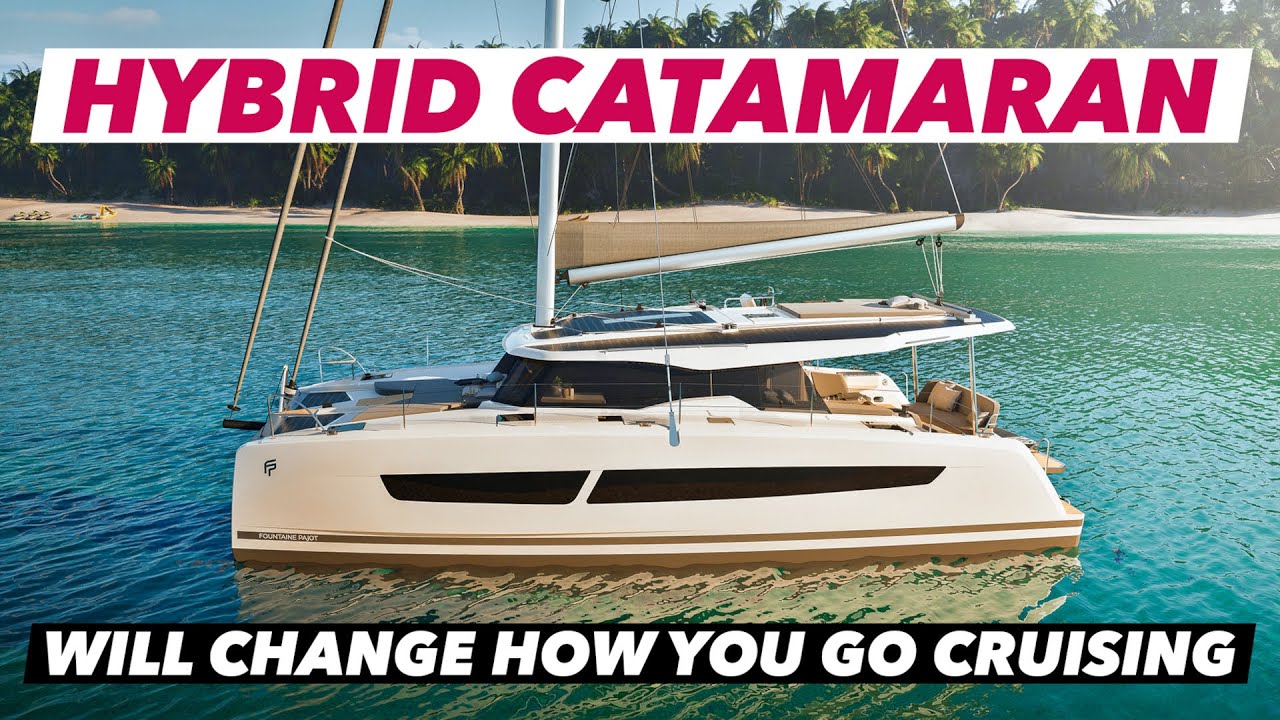
Yawing and Anchor Holding – https://www.practical-sailor.com/sails-rigging-deckgear/yawing-and-anchor-holding Cauți catamaranul de croazieră perfect care îmbină performanța, confortul și tehnologia de ultimă oră? Faceți cunoștință cu Fountaine Pajot 41 — o pisică uimitoare de navigație de 41 de picioare care redefinește ceea ce pot face crucișătoarele de dimensiuni medii, acum disponibilă cu propulsie hibrid-electrică. În acest tur și recenzie completă, vă luăm la bordul FP41 pentru a explora cabina sa deschisă și spațioasă, designul elegant al cocii și interiorul luminos și modern. Indiferent dacă visezi la pasaje în Caraibe, la insula mediteraneană sau la o viață de croazieră cu normă întreagă, acest catamaran oferă lux pentru bărci mari într-o dimensiune ușor de gestionat – și cu opțiunea pentru sistemul hibrid Smart Electric (ODSea+) de la Fountaine Pajot, poți să navighezi în liniște, să-ți generați propria energie și să petreceți mai mult timp în afara rețelei. Vom acoperi: ⚡️ Sistemul de propulsie hibrid-electric ODSea+ de la Fountaine Pajot ⛵️ Manevrabilitate, performanță și planul de navigare 🏝️ Aspecte interioare — versiunea proprietarului Maestro vs Quatuor cu 4 cabine 🌞 Opțiuni de energie solară și regenerabilă pentru o croazieră liniștită, durabilă nu este doar un alt catamaran – este un crucișător avansat și eficient pentru marinarii care doresc confort, performanță și durabilitate. 👉 Abonați-vă pentru mai multe excursii cu barca, recenzii și povești despre navigație în fiecare săptămână. 👍 Dați like videoclipului dacă ați face această croazieră electrică frumusețe! 💬 Comentează mai jos — ai opta pentru configurația hibridă sau ai rămâne cu motorina tradițională? #FountainePajot41 #HybridCatamaran #ElectricSailboat #SailingCatamaran #BoatTour #CruisingCatamaran #LiveaboardLife #SailingLifestyle #FountainePajot #ODSeaPlus #BluewaterSailing Practical Sailor este resursa dvs. de încredere pentru gearboats și recenzii. https://www.practical-sailor.com Discutați cu noi pe Facebook! https://www.facebook.com/PracticalSailor/
source
Fountaine Pajot 41 Review – Catamaranul hibrid-electric perfect de 41 de picioare pentru cuplurile de croazieră
21 thoughts on “Fountaine Pajot 41 Review – Catamaranul hibrid-electric perfect de 41 de picioare pentru cuplurile de croazieră”
Comments are closed.












You can install a hybrid system on your boat for around $2000
Making me go…hmmm.
I looked at this system on a new Leopard 46. A 54kw system (27 on each engine) and a 50kw/h gen with 3 years warranty costs as much as 3 times a Tesla Model Y (dual motor 85kw, 8 years warranty). The system is also a black box.
This is definitely the future, Yanmar already has an electric motor/battery which fits existing diesel mounts, significantly cheaper and, more importantly, a global dealership network for parts.
This hybrid system is all a gimmick. Too small a battery, not enough solar, costs too much, no real environmental benefit, adds extra weight so compromises sailing capability (which isn't great to start with). This type of system is only for day trips and even then I question why would you go this route. On my 45ft cat, if I do a day out on the boat If I do 2 to 3 hours of motoring, I would consume about 20 liters of diesel (~$40 AUD). These hybrid systems add about $100K to your boat cost. I could go out for 2500 days and still be ahead. Just doesn't make sense. I wait to see some real world data on these systems…
Just stop. Diesel is the only viable power unit for sailing vessels and will remain so unless some more energy dense technology is invented. I'm a sailor and engineer, but I think anyone with Google and a highschool diploma should understand this.
All information technology increases exponentially, which is very difficult for the human brain to predict and calculate, so the average layman is often surprised by the pace of accelerated change. We're only one or two paradigm shifting breakthroughs away from the end of internal combustion propulsion. As I type this, the largest engineering companies from all over the world are working very hard to bring practical electric propulsion to reality, and I have no doubt we will succeed.
I'm all for it. Hybrid electric is an obvious approach to me as an electrical engineer…
These boats need to put as much solar as they can. Example helm station does not have solar. Even the deck where you walk you could put solar but leave step spots. I think 5k to maybe 7kw of solar could be done. MAybe some that retracts. So when your on anchor you can be self sufficient 24/7 even with running AC 24/7. Keeping bedrooms seald up and small is key to run all night on battery. If your just island hopping I lean to a power cat hybrid loaded with solar. then run motors as needed.
Sunreef, out of Gadansk Poland, has been providing tech-leading solar clad hulls for years. Yes, their premium yachts start at the 60' size and are no within easy reach of the typical PS subscriber. Your review of the FP41 (taken at this year's Annapolis Show?) was well done.
Whatever happened to boating with a couple of 12V lead acid batteries, one as engine start, one as domestic load? 40 years I cruised with such a system and never had a problem. I moved up to a 24V system and that was fine. Only needed 24V for the windlass and a couple of other systems…spares available everywhere. OK, I'm obviously a dinosaur, but managed just fine all my days. I hate this new age reliance on solar for your laptops and screens. Learn how to sail, learn how to navigate, learn how to manage the power you have, learn how to use a compass.
Leaern how to bypass systems that fail and have a backup available.
Make sailing simple again!
You mean it's not $1.5 million ? ❤😂
From what I have seen watching many other sailing channels is this technology is still a ways off. If you want to pay a million dollars (or more) to BETA test for these companies, go right ahead…
No service solution. Best:)
At first glance I'm not a fan of the helm being separated from the lines/winches, as it makes single-handing this boat pretty much impossible, which shouldn't be the case for a boat under 40'. Or am I missing something about how it's rigged?
You'll wear out the Great Lakes before you charge back 500 amps. The batteries are the weak link.
Love the hybrid sail drive idea.
do you all forget about the couple that died in the electric sail boat
Thanks Tim and all. Looks like a well executed hybrid and a workable boat.
The big picture significance of this is that hybrids are becoming mainstream and production, which is a good thing. Well done FP.
Looks almost the same as the 42’ model we chartered in the Virgin Islands for 2 weeks last December, minus the hybrid. Sorry, but it was the worst sailing experience. No worries about seeing under the jib from the elevated helm in the 20-25 knots Caribbean breeze, the jib was out 3-4 times and the main only once because the winds were beyond the reef limits the charterer would allow.
On the surface there looks to be lots of room until you try to stow food for 6. We had to keep the boxes the delivery company sent the order in and lined the window ledges in the salon so we had somewhere to store the dry goods.
We had a great vacation on the floating cottage, but did not compare to two previous charters on island packets years ago.
We cover a lot of ground on our island vacations, very little diesel to fill the tanks on the sailboats after traveling a few hundred nautical miles, about $800 usd to fill the cat after doing the same thing. The hybrid would have to work really well just to break even in my opinion.
I’m told there are cats that sail very well, I can attest that this brand doesn’t fall into that category. It’s a vacation platform and that’s it.
Edit to add:
Ventilation is terrible, plan on running a generator and air conditioning in the tropics. The cockpit, or more appropriately the aft lounge area is unbearable in the heat as there is no way to get air into it at anchor unless you use a stern anchor I suppose.
Still skeptical, delivery skippers that I know from SA that have crossed the Atlantic actually ended up burning more diesel with hybrids than the standard motors. Have spoken to many owners about this and they have no faith in the systems, their mindset is for the added cost of hybrid systems they can buy literally tons of fuel and their yanmars are proven and reliable no matter what the climate and weather.
I looked at the electric propulsion option in the Hanse 410 and Dufour 41 and was glad to see this technology reviewed here. My interest in electric was eliminating the sound and smell of a diesel engine and the reduction of carbon production. Another pro as noted by others is that they should require less servicing. I think all that’s great but there are a few downsides which this video doesn’t mention. To me the main issue is that power density of current batteries is far far lower than power density of diesel. To get reasonable range you’ll need a good size battery bank which adds weight and reduces sailing performance, plus you’re going to want a gen set for backup. Note that the proportion of battery weight to boat weight goes down as the boat gets bigger, which I gather is why 40’ is the smallest boat that Hanse and Dufour offer electric, and conversely may make hybrid more practical for boats in the 45+ range. Also to note that hydro regeneration while sailing reduces boat speed, to my memory it’s about 1 knot, so there’s no “free lunch” there. Additionally as others here note, it adds $100k+ USD to the price depending on much battery (range) you want, a gen set, solar panels. A final concern I have is, given how new the technology is, competent servicing may be hard to find. I found it difficult just getting specs like range and power usage vs. regeneration rate from the broker. My conclusion is that as much as I’m excited by the concept of hybrid propulsion, (1) we need the next generation of battery tech (likely solid state) with higher power density and (2) as an early adopter of the technology you need to be prepared for all that comes with that. Hopefully we’re just a few years out from it being practical (and this is “Practical Sailor” after all!).