
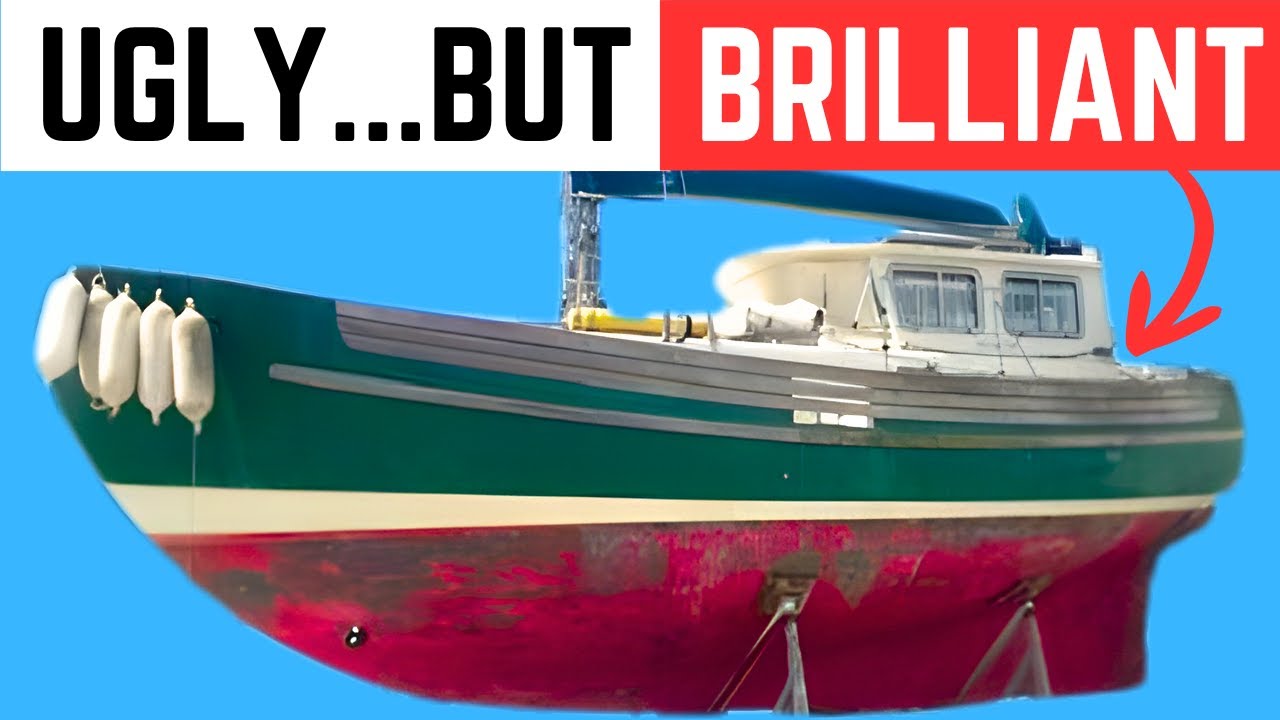
Când Fisher 34 s-a lansat, lumea yachtingului a râs. Ei au numit-o „sera plutitoare”, un „submarin pe roți” și „casă de bătrâni pentru marinarii care au renunțat”. Criticii au susținut că închiderea cockpitului l-a deconectat pe marinar de vânt și mare. Ei au spus că marinarii adevărați trebuie să fie umezi, reci și expuși la elemente pentru a naviga cu adevărat. Dar în timp ce puriștii înghețau în carlingele lor deschise, acest ciudat „remorcher cu pânze” era ocupat să supraviețuiască furtunilor Force 10 în Marea Nordului – fără ca echipajul să-și verse vreodată cafeaua. În acest videoclip, explorăm povestea celei mai batjocorite siluete din istoria navigației. Ne uităm la motivul pentru care corpul său Baltic Trawler este mai dur decât orice crucișător modern, de ce „oboseala” ucide mai mulți marinari decât furtunile și de ce rățușa urâtă a anilor 1970 este acum un clasic de cult care valorează mai mult decât bărcile de două ori dimensiunea ei. 👇 Verdictul: Acesta este un design genial sau doar o barcă cu motor cu catarg? Spuneți-ne dacă ați schimba cabina deschisă cu o timonerie în comentarii. Declinarea răspunderii privind utilizarea corectă a drepturilor de autor: Materialul prezentat în acest videoclip nu este deținut exclusiv de noi. Aparține unor persoane sau organizații pe care le respectăm profund. Utilizarea acestuia urmează liniile directoare ale Secțiunii 107 din Legea drepturilor de autor din 1976, care permite „utilizarea corectă” în scopuri precum critică, comentariu, știri, predare, cercetare academică și studiu. Utilizarea corectă este un principiu stabilit de legea drepturilor de autor care permite utilizarea limitată a materialelor protejate fără a încălca drepturile. Acest videoclip a fost creat pentru a îmbunătăți înțelegerea și aprecierea conținutului original, fără a provoca niciun prejudiciu deținătorilor de drepturi. Are un scop educativ și folosește doar mici fragmente din materialul original.
source
Arăta ca un „remorcher cu pânze” – dar s-a dovedit greșit criticilor
19 thoughts on “Arăta ca un „remorcher cu pânze” – dar s-a dovedit greșit criticilor”
Comments are closed.














Because the Fisher is NOT a sailboat! >>>It is a powerboat with a sail which is nearly useless,<<< almost impossible to sail upwind, and downwind you are lucky to make five knots. It is a classic and comfortable motorsailor, meaning the motor must be used to go anywhere. Yes, it can be reasonably comfortable, """sailing""" along in a more or less upright position. But, you are not """sailing.""" :)> :)> :)>
There's one of these in my marina in Alpena Michigan it always caught my eye.
Hopefully it will have a "For Sale" sign on it soon ❤
And this is why yacht club marker runners aren't really sailors either, just weekend hobbiests. Boats like these are built for all weather use. Larger engine's being a motor sailor to survive stormy seas, a nearly fully enclosed design to push through hard boarding seas. Built on a work boat design to actually go out and survive when most sailboats run from a dark cloud. These are more styled to live on the water, not just play on it. The problem is that hobby, yacht club sailors are in a group that claims tradition but is just over 100 years old started by wealthy weekend hobbiests. Boats like the Fisher are a evolution of workboats that are built for more than just going fast, they fallow a tradion far older than 500 years, the actual tradition of sailing and sailors. Comparing a boat like a fisher to a c&c is like comparing a Corvette to a 18 wheeler, but truth is the Vette is very limited, the rig has to be able to go thru everything to get the job done. These boats where built to survive and fallow the true tradition of sailing, come back alive and well no matter what.
That's a beautiful boat
The first thing I noticed, while watching YouTube sailing channels, was that the refitted boats got quickly modified. And the most common modification I saw was a "hard dodger". This was often a rigid awning that connected to some sort of windshield in front of the companionway. This was intended to be sturdy enough to withstand a serious wave hit.
If I were to have a sailing yacht, I would insist on having at least that.
Let the racers snicker all the want. But shelter from the wind, the sun, and the rain is likely a main reason powerboats are far more popular than sailboats. And this is the easiest shortfall to fix.
I'm seeing a lot of Nauticat 33s
I have the Sailor 30 Northerest wonderful with the enclosed wheelhouse and of course no cockpit
Why did you start with the 34 ? the smaller boats came first folk had got use to the pretend fishing boat looks by the time the 34 came along. yes they did draw comment, not everyone requires that sort of pampering some of us like a little performance. some of us did not have pockets deep enough to afford the relatively high purchase price. Colvic were producing a vaguely similar affair long before fishers so the concept was hardly new. You are correct they make a highly suitable little ship for cruising northern waters. Some family friends purchased one with their immense brood I can see the justification. With a little digging you could have built a sufficient library of photos to be able to avoid the embarrassment of featuring any old rubbish non pertinent photos to illustrate your article. A little more digging would have unearthed the 34 came late in the day for the snarky comments.
The problem with the Fishers are their dismal sail area/displacement ratios. Not only does this make them excruciatingly slow under sail, but their short rigs and undercanvassed attitude, combined with a lot of underwater volume and a soft bilge, encourages them to roll like there's no tomorrow. None of the Fishers reach the minimum, recommended SA/D of 13 -14, as suggested by most reputable naval architects.
We own a similar craft, a somewhat pimped Colvic Watson 32. Our tub has an SA/D of 17.8 and it makes long hauls tolerable by the boat's speed and, consequently, their brevity. All without detracting from the vessel's overall seaworthiness. We do appreciate the comfort of a wheelhouse. Yes, we have made many longer passages in her and even across the North Sea, a couple of times. No ship is immune to the movement of the sea, no matter the hyperbole, and you still have to hang on to your coffee mug.
I llike and owned boats with and without a "greenhouse"… From 22 to 32.feet and i enjoyed all of them in different ways… Some bounced, some split the waves like and axe and some was rolling and made you laugh while feeling seasick!
Had great times on all of them! Especially when the crew and i was in the same place… Presence!
Surviving is a wonderful feeling! Dont take that away from sailors telling stories (-:
And BTW… Stop talking in positive terms according to the fisher 25-32! The prices might go up and im not planning on making more money than needed.. and also – im not in hurry! 4-5.knots is a perfect speed for my soul.. not everyone has the time for that…
This should be a focus on pilothouse sailboats in general but motorsailers are not a good example for north atlantic cruiser. There are better options..like spindrift 43 pilohouse. I own one and maybe slightly bias however having huge windows the fisher has is a weakness imho.
Motorsailers are rarely pretty but I'll take one any day over an open cockpit. I say let the young bucks out to impress betty lou brave the elements in a gale with a following sea, I stand the watch coffee in one hand tiller wheel the other.
There is nothing ugly about these boats, in fact they're beautiful looking vessels
I hear what people are saying, sailed in the UK waters can be very different day on day with massive changes. What the Fisheries gives me is confidence to tackle the variety the UK coastline & weather we have to face to get back home safely.
Anyone know if the lines lead to the pilothouse?
Also, most motorsailers have high bulwarks and solid handrails. Unlike modern sailing boats with their triplines and triprails. They call them "lifelines" – but I would not trust my life on a thin steel/nylon etc cable/line…
It's funny that modern yacht club around-the-cans-sailors dismiss pilothouses on sailboats. Yet Alex Thomson's IMOCA 60 racing boat has enclosed steering/sail handling position (basically an enclosed pilot/wheelhouse)…
There's a lot of windage in that pilot house. Those big windows probably wouldn't do well when hit by a big wave.
Real sailing is not done in marina bars. A warm wheelhouse is really good in a blow.