
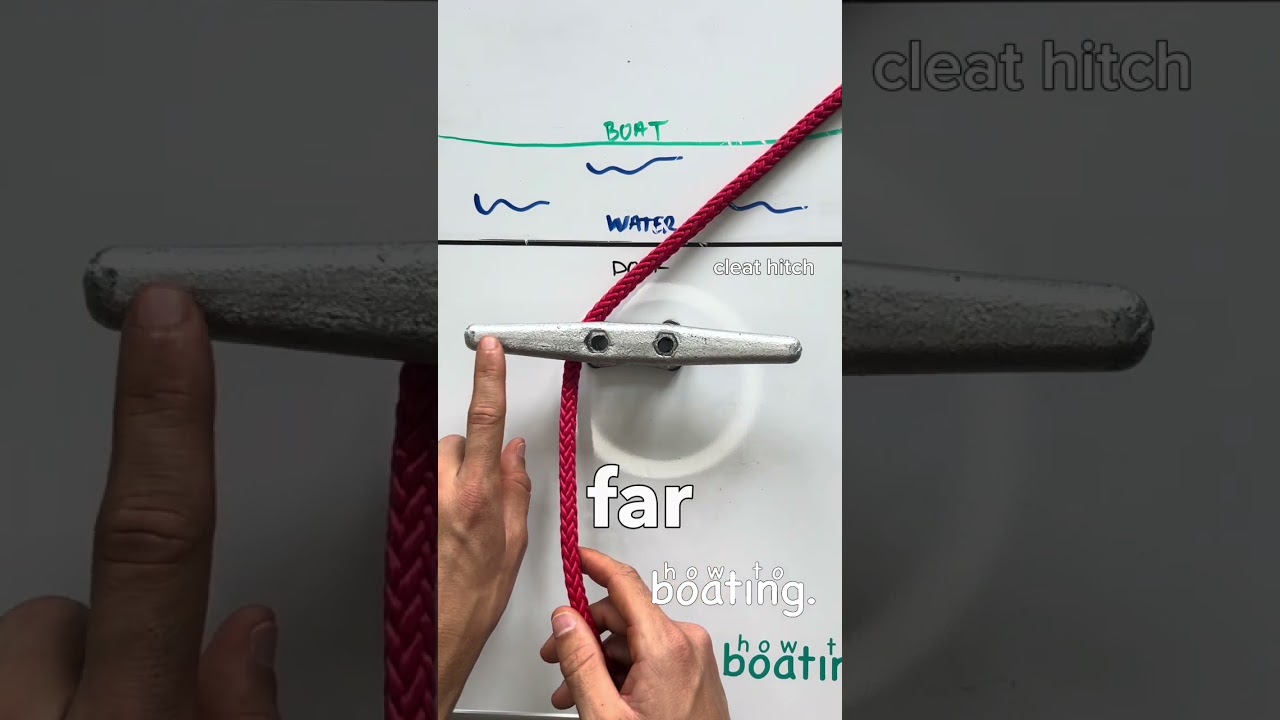
Mulți oameni învață o mulțime de moduri diferite de a lega un cleat. Acesta este cel mai bun mod în care am găsit să limitez riscurile (dezgropare, alunecare, ciupire, etc …). #whowToBoating #howto #howTotieAcleat #Cleathitch #Cleat #Marina #Boat #Boating #Yacht #Yachting #Dock #Docking #Tips #tie
source
Cum să legați un cleat
47 thoughts on “Cum să legați un cleat”
Comments are closed.












…and it's done NOT the safe way in this short. Make a full circle before "crossing" the cleat. Reason: If you make a full round with your line, the line will get an initial hold by it's own load on the line. If you don't do that, the line may come loose in a bad moment you're not expecting it.
It’s pretty hard to F it up.
WRONG! A full “Round turn” around the base of the cleat then start your crossovers!🇺🇸⚓️😎
You're better off making a round turn of the cleat base before making the figure of eight.. this takes the tension off the line where it comes into contact with the metal of the cleat and helps protect the line, it also allows for the line to be released slowly under control if that's required.
I miss the towboat
The gold is in the comments, OXO will be my method in future. It's a horn cleat by the way.
WTF is this? Not cleat hitch, but what?
thats actually slightly incorrect.
why does every short think they need to loop? theres zero reason for the video to start at the end for the loop. it doesnt accomplish anything except making the beginning of the video stupid.
As a commercial Hardhat Diver (Surface Supplied Air), this is how we were taught to tie down small barges and boats.
Full turn around the base
I don’t think that is right. Sorry.
It is called an OXO. It is Full around the cleat, then a one-X, the second half tucked under. Then a full round again as a safety turn, unless you are tying another line above it. Now, please take down this disinformation and repost it.
Yea pin rail
👍 nice
And if you come to YouTube to learn how to tie a cleat hitch you probably shouldn't have bought a f**** boat
I got told o oxo 0
Need to try that and hope my boat don’t float away lol
Round turn, then figure eights
I grew up on the water. It's cool, this is how homos do it. I've my own proven way.
this is the correct way. all the discussions about extra wraps is armchair captains that never owned their own boat. can it be done other ways? sure. but this is the only way secures the boat and makes release a breeze. any extra wraps only introduces the potential for problem. don't bother replying to me, I don't care what you claim the Navy taught you. this is the right way.
why show the wrong way? was that to be funny ?
Well, I'm not into stupid rules and making things pretty just to please people….
When possible I start on the far side and then … wrap once, then figure 8, then wrap once, then figure 8, then wrap once, then figure 8, then wrap once, then figure 8, then wrap once, then figure 8, then wrap once, then figure 8, then wrap once, then figure 8, then wrap once, then figure 8, then wrap once, then figure 8, then wrap once, then figure 8, then wrap once, then figure 8, then wrap once, then figure 8, then ….
Then I stand back and look to see if i can make one more pass! 🤔🤨👍👍👍
If you can't tie a knot…. Tie a lot!
Do a full round first
Now for the 1-handed flick trick…
Naval Standard is a full round turn then you stack don’t listen to this lol 😅
Next up, how to tie your own shoe. Thanks, what would I do without this video?
wrong. The last loop is twisted twice, and then pulled tight.
learned to do this when I was six years old, back in the 60's all the docks had cleats on them so it was my brother's and I job to quickly tie a cleat. Later as dad was doing his thing it was always fun to walk down the dock and show an adult how to tie up their boat,… lol,
This is wrong. Maybee you do it correctly??😂
Bitter end is ALWAYS boat side, dock line loop goes to cleat on dock… In the case of weather, or emergency, and the boat needs to get off the dock, it is easier to release bitter end from boat cleat…fwiw
I'm just waiting for all the know-it-alls in the comments to post a link to the videos THEY took the time to make and share with everyone to help others instead of just sitting in their basement behind a keyboard talking shit about other people who actually tried to help others.
Just use tape.
It's actually a red crab 🦀 when you do just 1 loop.
The water has snakes in it
thats not the bitter end. The "captain" must have got his certificate from the bottom of Cracker Jacks
In nautical terms, the "bitter end" of a rope or line refers to the end that is fixed to the ship, often near the anchor bitts or other deck fittings. It's essentially the non-working, anchored end, opposite the working end used for handling the rope. The term also idiomatically refers to the very end of a difficult or prolonged process.
For for fisherman it's 2 crossed loops and a half hitch at the end😊
You're wrong. Too much crosses.
Thanks I was wondering about that. How about a video on tying a rope to an anchor so I don’t loose my anchor.
I always make a U shape and put it through the middle..hook both sides..THEN proceed with this video. 🤷♂️ just what I was taught and I like it better
Youtube algo going berserk again!!
for those claiming they have been taught to do one (or more!) rounds instead of relying just on the figures of eight you are completely wrong. The benefit of the cleat (and of figures of eight) is exactly the easyness to release the line even if it's under a huge load. Doing a full round at the basis of the cleat just increase the probability that the line gets stuck and unreleasable.
I do half that lol
It’s not a boat, it’s a yacht
What’s tying a pair of cleats called?
Very close to what I was taught by boat captains in southern California, Long Beach area. two bends on base, 2 cross overs, but then 2 locks. So just 1 extra lock. Fishing boat and scuba charter captains sourced knowledge. I was working around them as a professional scuba diver.